
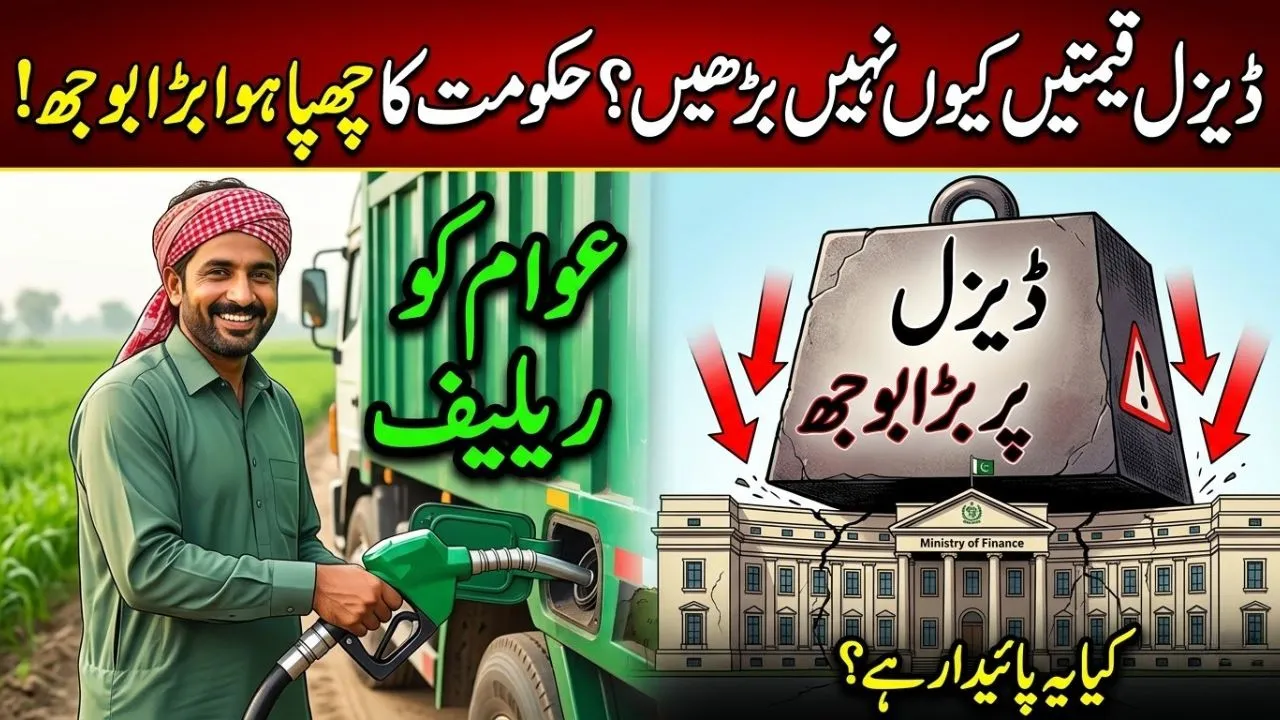
In a major relief move for consumers, the federal government has decided to keep fuel prices unchanged for another week, despite a sharp increase in global oil costs. However, this decision is coming at a heavy cost, as the government is now effectively providing a subsidy of Rs. 118 per litre on high-speed diesel (HSD).
According to the latest figures released by the Oil and Gas Regulatory Authority (OGRA) and industry sources, the move has placed an estimated Rs. 45 billion burden on the national exchequer.
Diesel Prices Frozen Despite Massive Cost Increase
Data shows that the ex-refinery price of diesel has surged significantly in just over a month. Between February 16 and March 21, 2026, the cost jumped from Rs. 330.19 to Rs. 438 per litre, marking an increase of Rs. 118 per litre.
Instead of passing this increase on to the public, the government has chosen to absorb the entire difference through subsidies, keeping the retail price unchanged at Rs. 335.86 per litre.
This means consumers are currently paying far less than the actual cost, thanks to government intervention.
Breakdown of Current Diesel Price in Pakistan
The final price consumers pay includes several fixed components, even though the base cost has surged. Here’s a simplified breakdown:
- Ex-refinery price: Rs. 438 per litre
- Petroleum levy: Rs. 55.24 per litre
- Climate support levy: Rs. 2.50 per litre
- OMC & dealer margins: Included
- Final consumer price: Rs. 335.86 per litre
The gap between the actual cost and retail price is being covered through the price differential claim, effectively turning into a massive subsidy.

Why Diesel Subsidy Matters for Pakistan
Diesel plays a critical role in Pakistan’s economy. It is widely used in:
- Transport sector (trucks, buses, logistics)
- Agriculture (tractors, tube wells)
- Industrial operations
By keeping diesel prices stable, the government is aiming to control inflation, especially food prices, which are directly linked to transportation and farming costs.
This move offers short-term relief to the public already struggling with rising expenses.
Experts Warn: “Not Sustainable”
However, financial experts are raising serious concerns about the long-term impact of this policy.
CEO of Topline Securities, Mohammed Sohail, has warned that such a heavy subsidy is “not sustainable” if international oil prices remain high and the Pakistani rupee continues to face pressure.
Economists fear that continuing this policy could:
- Increase the fiscal deficit
- Put pressure on foreign reserves
- Force sudden price hikes later
Risk of a Sharp Price Shock Next Week
While the current decision has delayed the burden on consumers, it may not last long. Analysts suggest that if global oil prices remain elevated, the government may be forced to pass on the accumulated impact in the next fuel price review.
This could result in a sudden and steep increase in diesel prices, which may shock consumers and trigger inflation across multiple sectors.

Government’s Balancing Act
The government is currently walking a tightrope—trying to balance:
- Public relief
- Inflation control
- Fiscal responsibility
By absorbing the cost for now, authorities are buying time, but the growing subsidy bill indicates that difficult decisions may be unavoidable in the coming weeks.
Final Thoughts
The Rs. 118 per litre diesel subsidy highlights the government’s effort to protect consumers from rising global oil prices. While it provides immediate relief, the Rs. 45 billion financial burden raises serious questions about sustainability.
If current trends continue, Pakistan could soon face a major fuel price adjustment, making this temporary relief potentially costly in the long run.
For now, consumers may benefit—but the real impact could be just around the corner.